
Meet Bear Hunter Joakim Mikaelsson
How Bear Hunting Works in Sweden's Wildest Terrain
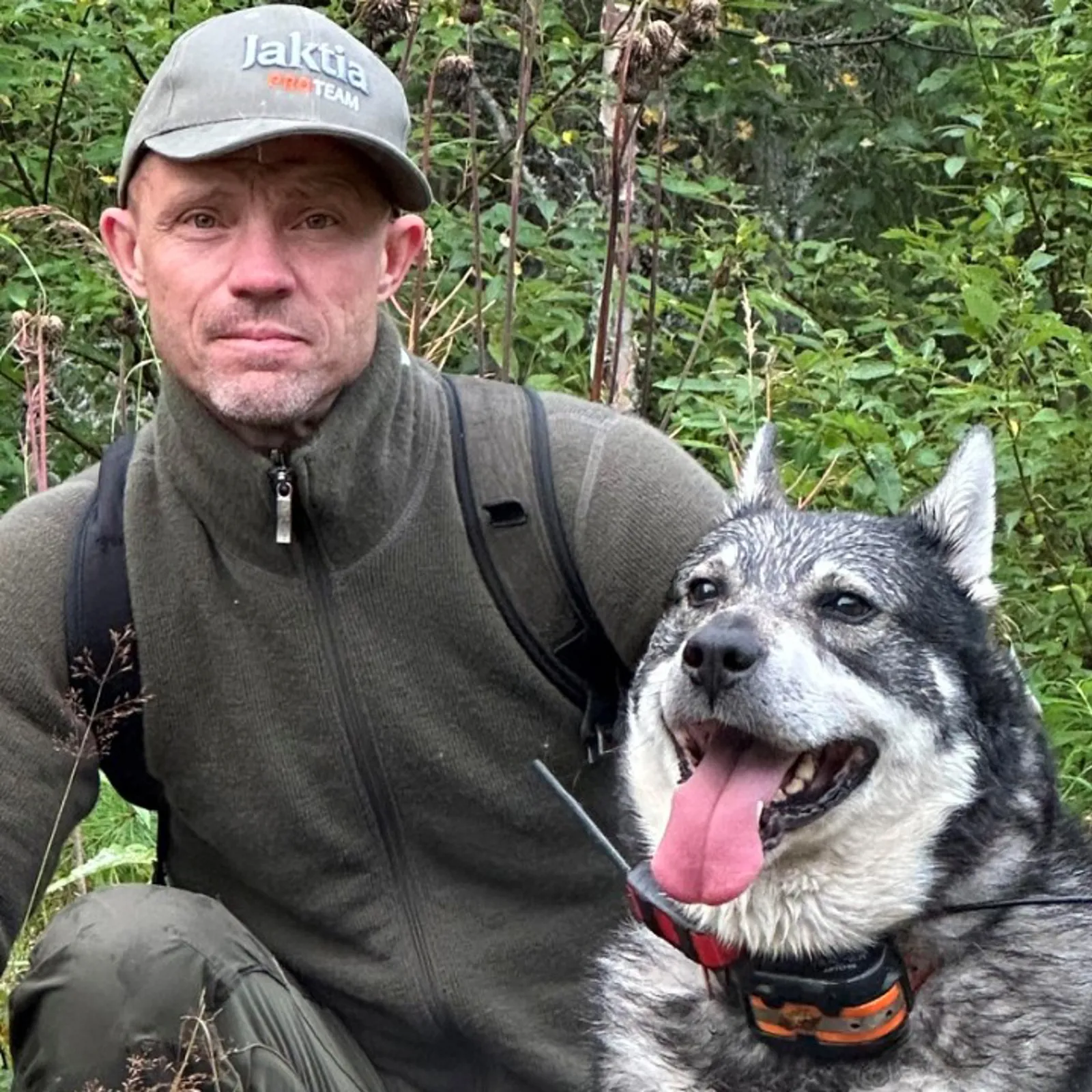
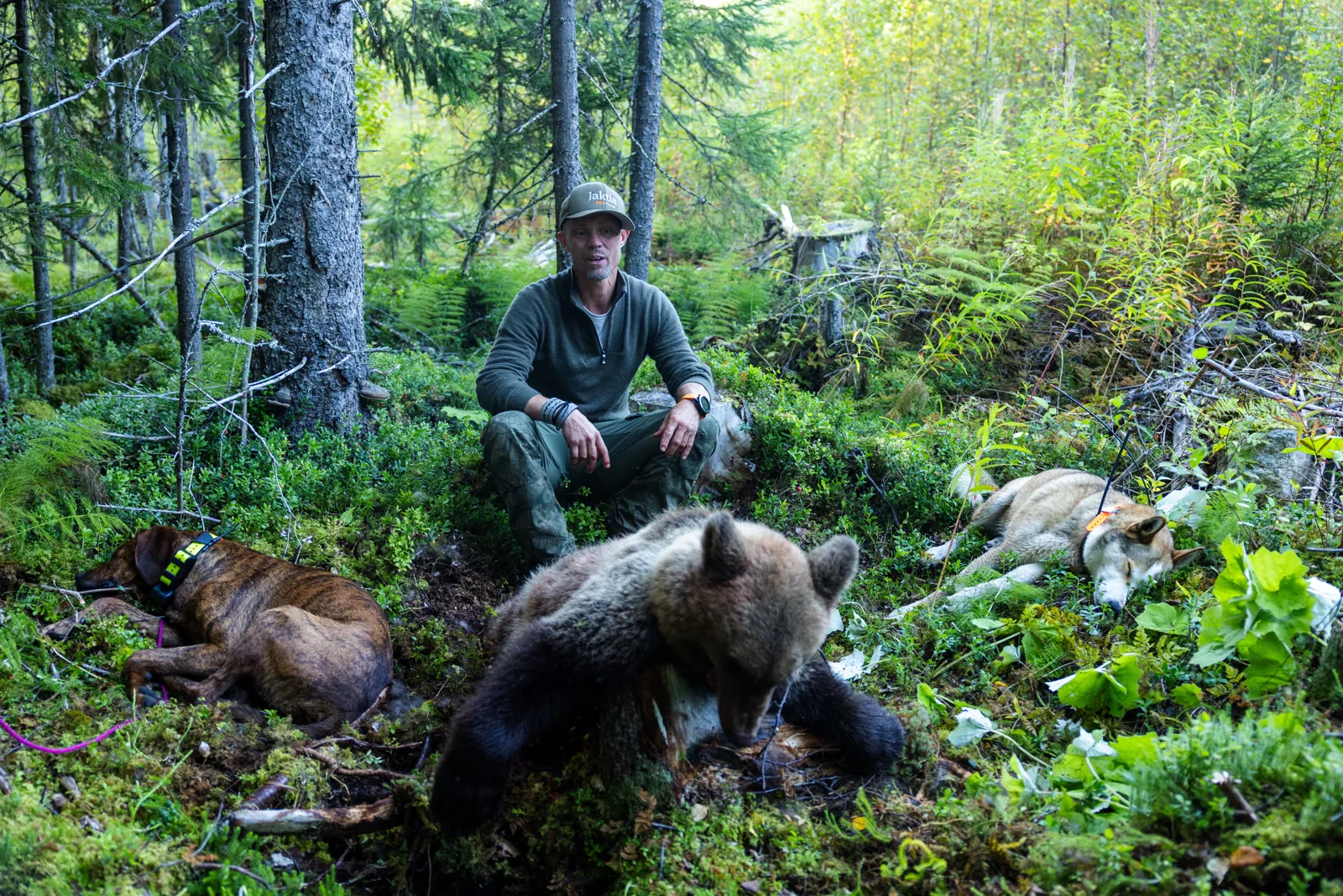
In the deep forests of northern Jämtland, just a few miles north of Strömsund, bears roam freely. This is also home to Joakim Mikaelsson – a paramedic by profession, but a passionate hunter and dog handler in his spare time. He has taken part in many hunts, but it’s the camaraderie, adrenaline, and respect of bear hunting that leave the strongest impressions.
“The bear is a thinking animal,” says Joakim, who has extensive experience hunting bears.
“It’s different from hunting hoofed game. You need to be prepared and alert – or things can get dangerous.”
How does a bear hunt work?
Bear hunting is not something you dive into lightly. Joakim has hunted since he was a child, but his first encounter with bear hunting happened by chance – his first hunting dog picked up the scent of a bear instead of a moose. That moment sparked an interest that has only grown stronger over the years.
The hunt itself is intense. You need to be ready to make quick decisions at close range. According to Joakim, regular shooting practice is absolutely essential:
“A poor shot doesn’t just mean unnecessary suffering for the bear – it can be downright dangerous for the hunter. That’s why you need complete control over your gear.”
For bear hunting, Joakim uses an Aimpoint® Micro™ H-2 red dot sight on his rifle:
“I appreciate how compact and reliable it is. In dense forests where encounters happen at close range, nothing beats a red dot sight. I do have a low-magnification scope as well, but for bear hunting, it’s always an AIMPOINT sight that I trust.”
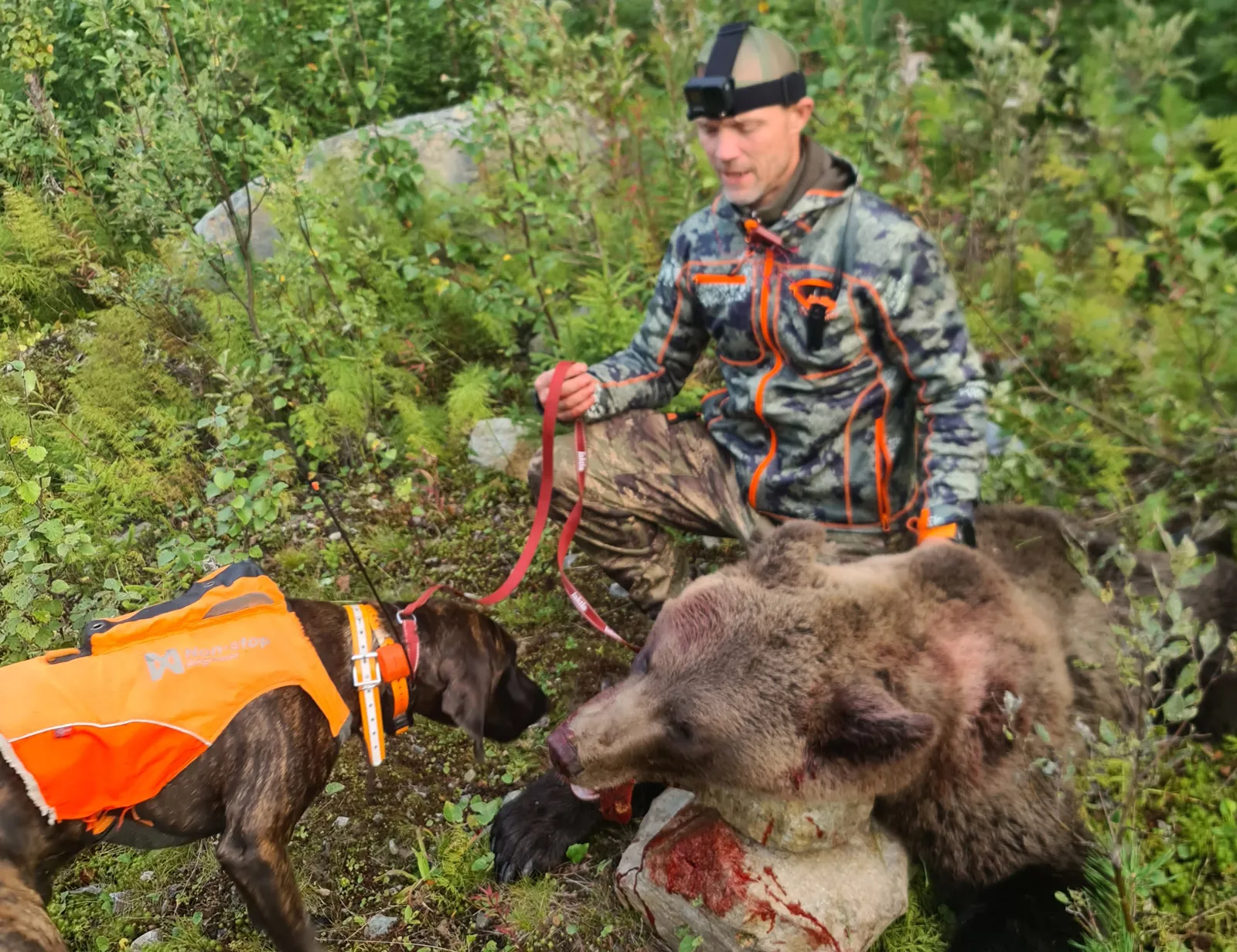
When hunting gets real – facing a bear
One of Joakim’s most memorable hunting experiences doesn’t involve taking down a bear – but being charged by one. Without a rifle in hand, just a few meters from his car, he found himself face to face with one of the forest’s largest predators. The bear appeared on the road as he was gathering his dogs, thinking they had picked up the wrong scent.
“I don’t think I’ve ever run that fast,” he laughs. “I made it back to the car just in time, dove in through the passenger door where a buddy of mine was napping. The bear followed and stood right outside, staring straight through the window. My friend woke up wondering what I was doing – until he saw the bear too.”
It’s the kind of encounter that commands respect – and underscores the importance of both mental preparation and the right equipment.
Bear hunting requires respect – and the right start
For those curious about bear hunting, Joakim offers clear advice:
“Don’t start on your own. Connect with experienced hunters, tag along, and learn the ropes. The dogs are absolutely crucial in bear hunting – without them, it’s impossible.”
Interestingly, many skilled bear dogs come from southern Sweden, where the fast-paced wild boar hunts prepare them for tougher challenges. Dogs with the grit for wild boar often have the potential to become excellent bear dogs.
Joakim emphasizes that respect for the bear must always be present. He has seen how the hunt can sometimes drift toward macho attitudes – something that benefits neither hunters nor wildlife.
“It’s about hunting responsibly,” he says. “Bear hunting should be conducted with the same care and thoughtfulness as any other form of hunting.”
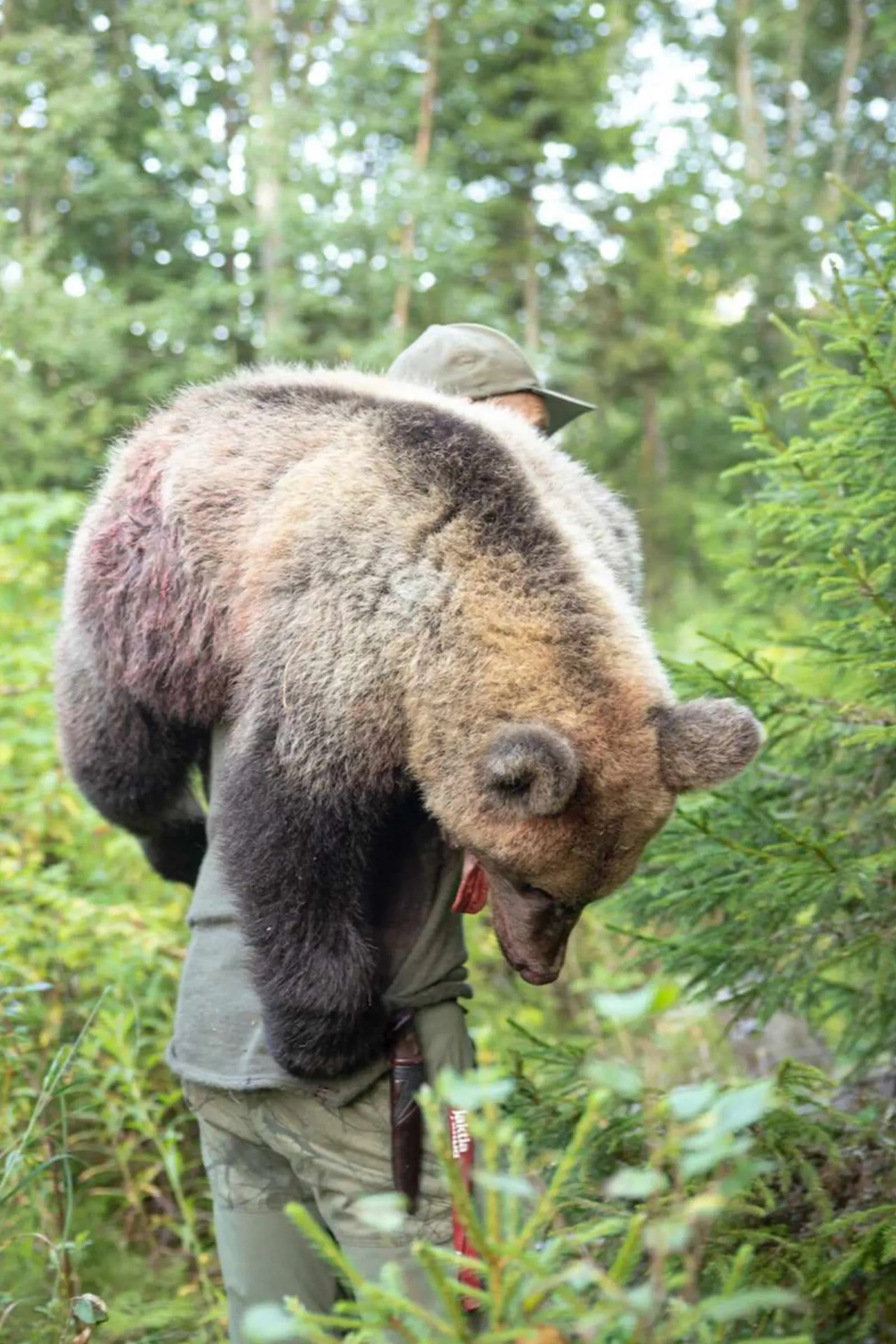
Bear hunting as part of wildlife management
Sweden has one of Europe’s largest bear populations, with around 2,900 brown bears. To keep the population at a sustainable level and reduce the risk of human-bear conflicts, regulated hunting is used as a wildlife management tool. The hunt is conducted under strict regulations with annual quotas set by the county administrative boards.
“There are still plenty of bears in Sweden,” says Joakim Mikaelsson. “But we’re seeing the population skew younger and smaller since the larger, solitary bears are typically the ones taken during the hunt. Female bears with cubs are always protected.”
Facts About Bears in Sweden
How many bears live in Sweden?
About 2,900 brown bears, according to the Swedish Environmental Protection Agency.
What species of bear lives in Sweden?
Only the brown bear (Ursus arctos), Scandinavia’s largest land predator and part of the European brown bear population.
How much does a bear weigh?
- Females: 100–150 kg
- Males: 150–250 kg, occasionally up to 350 kg
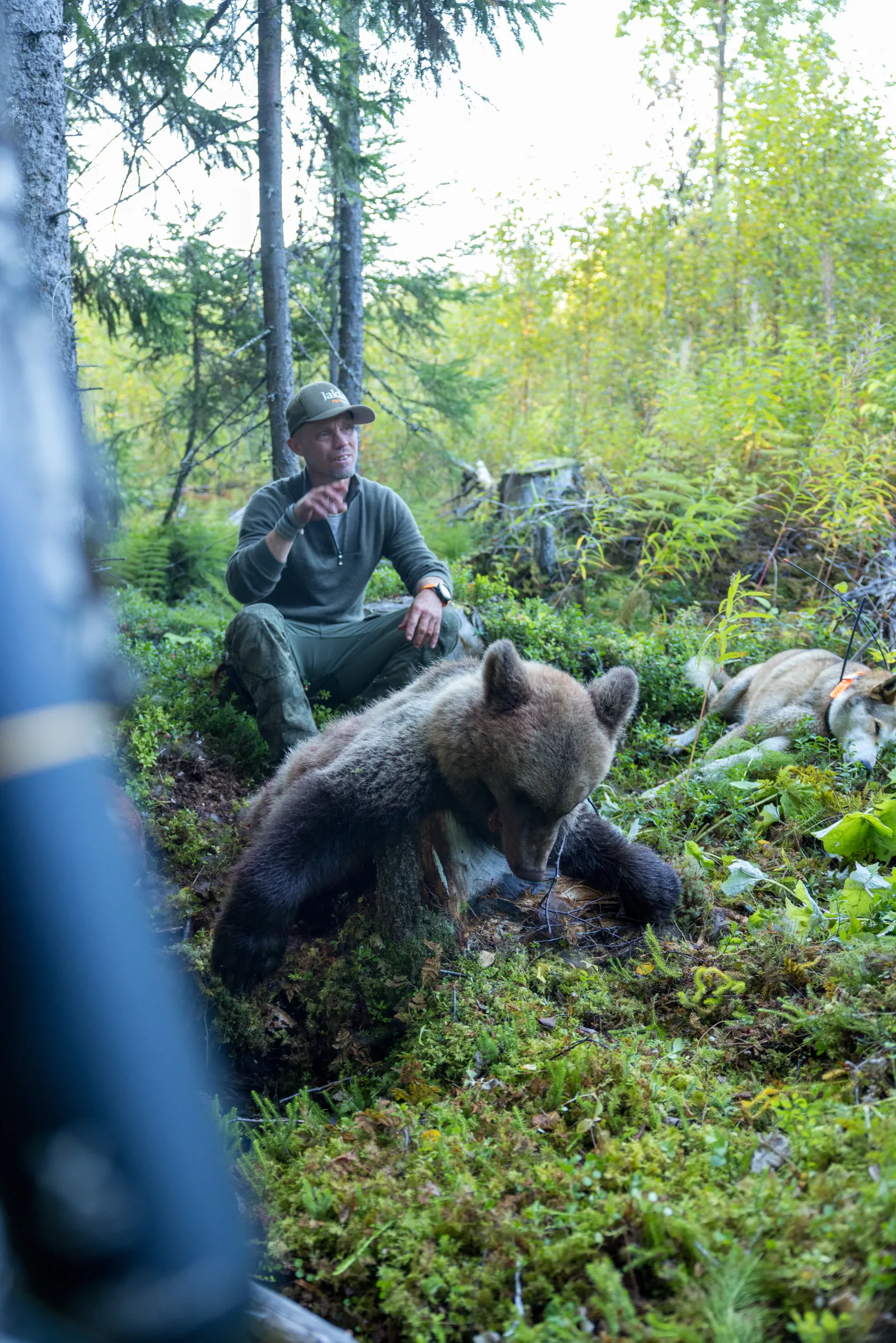
What’s the largest brown bear?
The Kodiak bear (Ursus arctos middendorffi), found on Alaska’s Kodiak Islands:
- Males can weigh up to 680 kg, sometimes over 700 kg
- They stand up to three meters tall on their hind legs
- The Kodiak bear is larger than the grizzly bear, another subspecies of brown bear.
What’s the largest bear ever?
The short-faced bear (Arctodus simus), now extinct, was the largest known bear species. It lived in North America during the Ice Age and could weigh up to 1,000 kg.
How fast can a bear run?
Up to 60 km/h.
When do bears hibernate?
Typically from October–November.
When do bears emerge from hibernation?
Usually between March and April.
When is bear hunting season in Sweden?
Bear hunting is regulated and typically runs from August 21 to October 15.
- Quotas and hunting periods are determined annually by each county.
- Female bears with cubs are strictly protected.
How many bears were harvested in Sweden?
In the 2024 hunting season, 487 bears were harvested during the licensed hunt. The highest numbers were in:
- Gävleborg County (127)
- Jämtland County (124)
- Västernorrland County (85)
Additionally, 56 bears were taken under special permits for population control.
A Swedish Saying: "To Do Someone a Bear Favor"
In Sweden, there’s an expression – “to do someone a bear favor” (att göra någon en björntjänst). It means offering help with the best intentions but causing harm instead.
The phrase comes from a French fable where a bear tries to swat a fly off a sleeping friend’s head – using a large rock. The bear gets rid of the fly… but kills the friend in the process.
There’s no direct equivalent in English, but it’s a good reminder that even well-meant actions can sometimes backfire.
Product Highlight: Aimpoint® Micro™ H-2
The Aimpoint® Micro™ H-2 is trusted by millions of hunters and sport shooters worldwide and is regarded as the top choice for speed and precision in a red dot sight.
This second-generation AIMPOINT MICRO sight features an upgraded housing with flip-up lens covers. Thanks to advanced lenses and coatings, the optical performance and clarity of the red dot have been significantly enhanced. It delivers 50,000 hours of use on a single battery. The MICRO H-2 is available with 2, 4, or 6 MOA dot sizes.