6.23.2026
Innovation in total defense is not only about new technology. It is also about speed, production and clear long-term conditions. In Almedalen, Aimpoint brought key stakeholders together to discuss how Swedish innovation can become real defense capability.
Aimpoint in Almedalen: Innovation Requires Speed, Dialogue and Long-Term Commitment
Sweden’s ability to strengthen its total defense depends on more than resources and equipment. Equally important is the ability to quickly identify new needs, develop solutions and turn innovation into real capability.
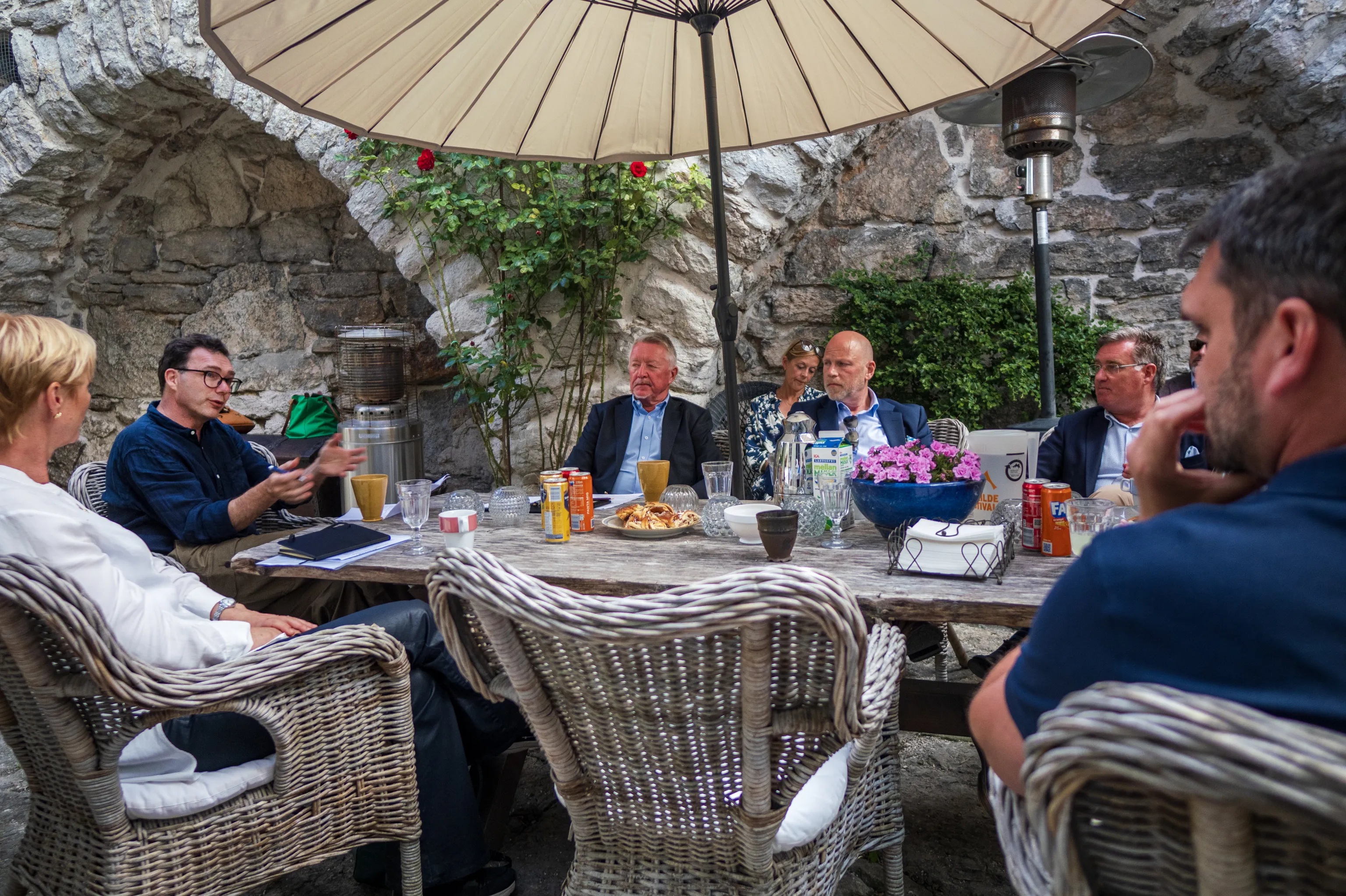
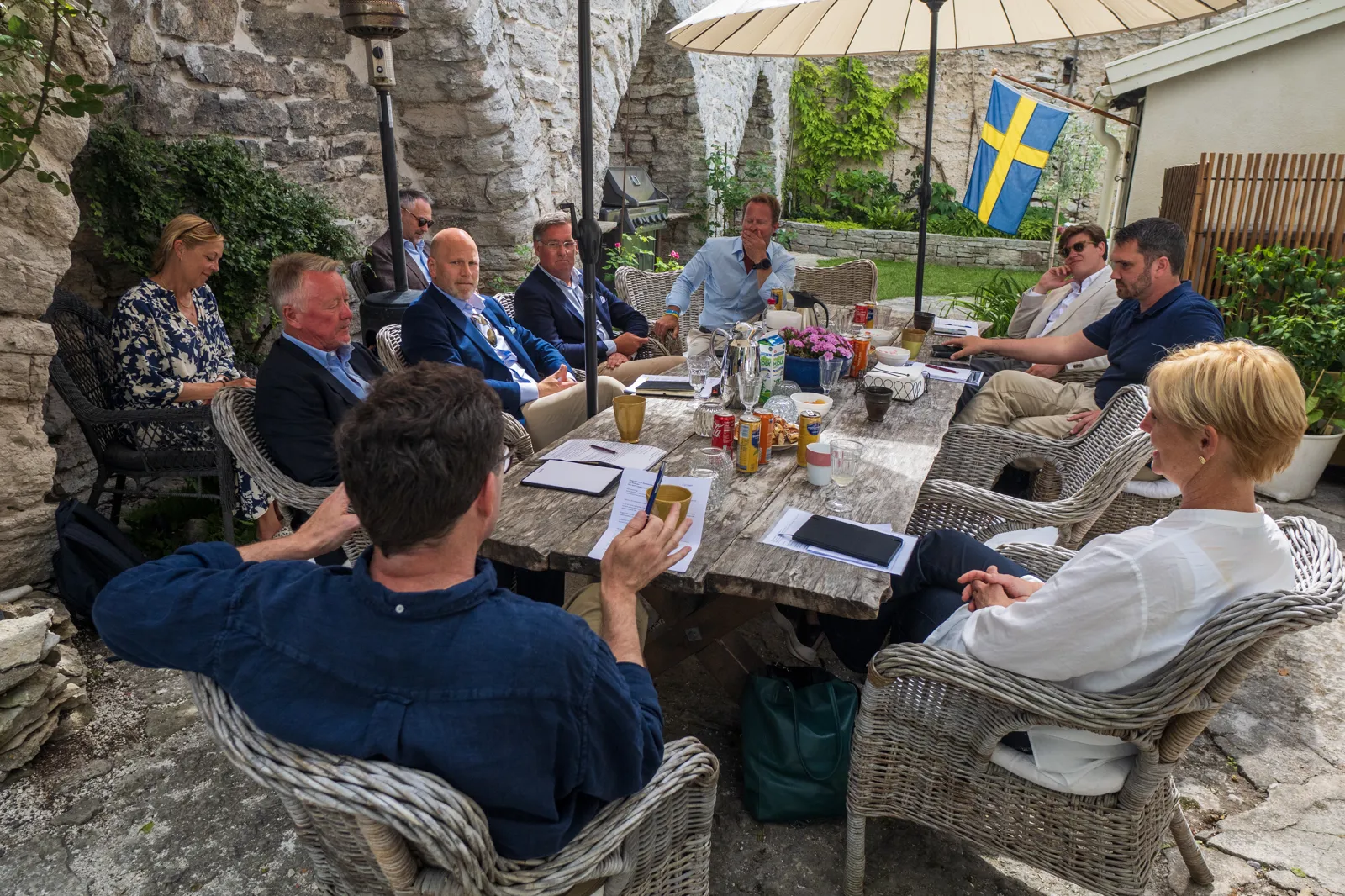
This was the starting point when Aimpoint invited representatives from politics, government agencies, research and industry to a roundtable discussion during Almedalen Week, focusing on innovation, supply capability and the development of Swedish total defense.
The discussion was held in SOFF’s garden in Visby and was moderated by Robert Limmergård, Secretary General of SOFF. Participants included David Sikström (KD), State Secretary at the Ministry of Climate and Enterprise, Erik Ezelius (S), Member of Parliament and member of the Committee on Defence, Jonas Lotsne, Head of Army Materiel at FMV, Karin Nygren, Director of Innovation at FOI, Jonas Rydin from Quartermaster for Ukraine, Reijo Bragberg, Special Advisor, Corporate Business Development at Nammo, and Per Lovatt, CEO of Aimpoint.
A central part of the discussion focused on lessons learned from Ukraine. The war has created an environment where new problems must quickly be met with new solutions. Technology is developed, tested, adapted and improved at a rapid pace, often in close contact between users, developers and producers. This highlights the importance of rapid feedback, decentralized decision-making and the ability to think in terms of capability rather than individual products.
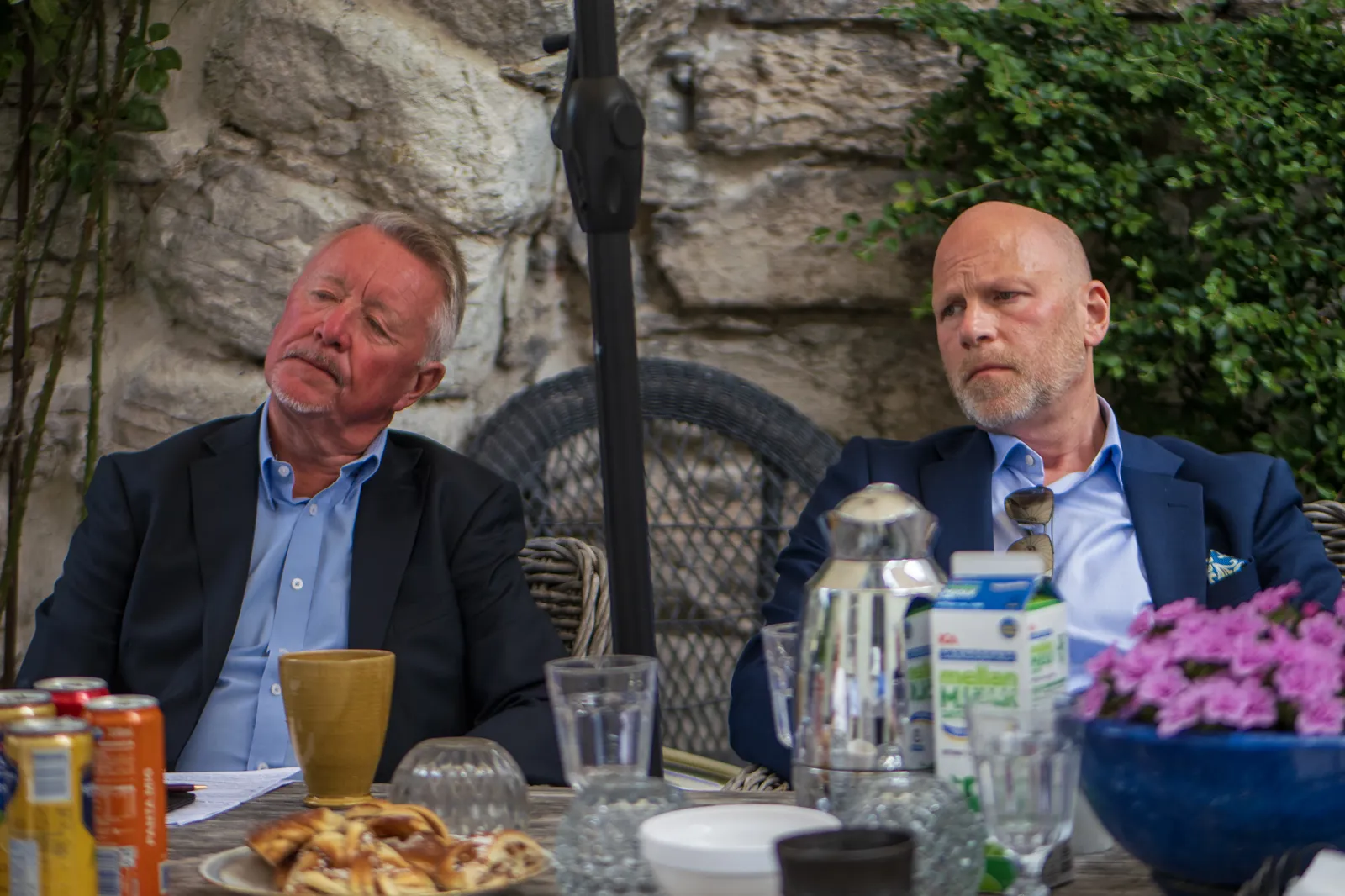
For Aimpoint, this is familiar logic. The company was founded 50 years ago around a new idea that became the world’s first red dot sight. The first sights were developed in close contact with hunters and sport shooters, where practical feedback led to new improvements and new models. The same basic principle remains central today: innovation begins in the meeting between technology, user needs and the ability to make the solution better.
“Innovation is not only about developing the next product. It is just as much about ways of working, production, speed and the ability to adapt to new needs. That capability is becoming increasingly important as Sweden and Europe strengthen their total defense,” says Per Lovatt, CEO of Aimpoint.
Aimpoint currently has more than 600 employees in Sweden, with operations in Malmö and Gällivare. Around 70 people work in research and development, and the company also has a dedicated Future Technology Studies function, focused on technology and future needs. Innovation is therefore both about product development and about understanding which capabilities may be needed in the future.
It is also about production. Aimpoint manufactured approximately 400,000 sights in 2025. In 2026, the company had already reached the same level during the first five months of the year. That increase in capacity is itself the result of innovation, automation and new ways of working.
“We are prepared to invest. But we need to know where to invest, that there is a long-term plan and that we stick to it,” says Per Lovatt.
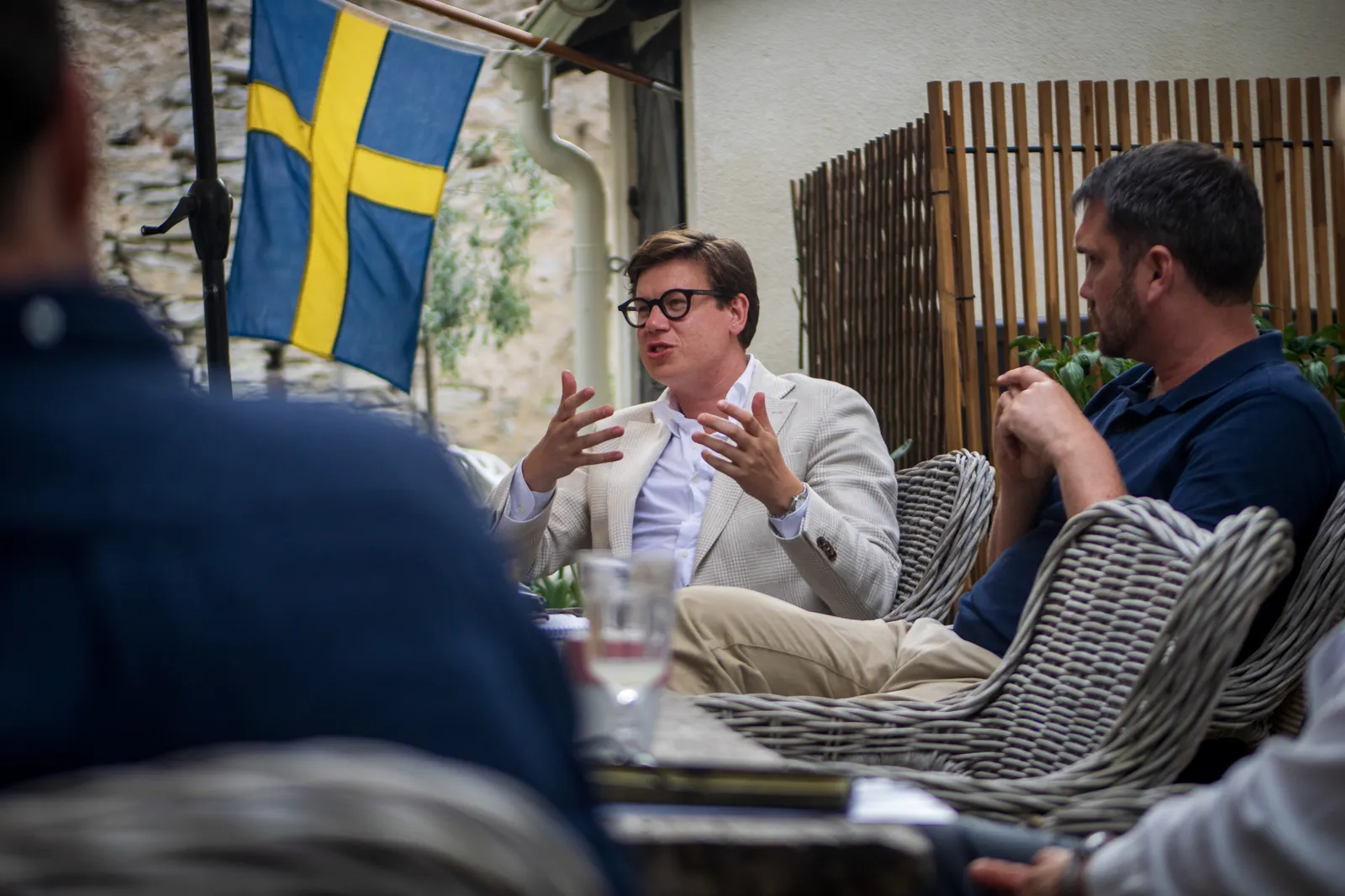
Several participants highlighted the need to further develop the forms of cooperation between the state, government agencies, research and industry. Existing tools and regulations can already be used more actively, including through earlier dialogue, clearer signals about needs and better conditions for companies to understand how they can contribute. At the same time, the conditions differ between large established companies, mid-sized specialist companies and smaller innovation companies that may quickly need financing, contacts and feedback in order to take the next step.
The discussion also showed that innovation is closely linked to strategic control, supply capability and European redundancy. For industry, investments in capacity and new technology require clear signals and long-term conditions.
“There is a lot of talk about strategic control, but we need to know what is meant by strategic control and receive clear signals. We can invest and expand, but we need to do it in a long-term direction. This can be solved if we take small steps at a time. We are prepared to invest,” says Reijo Bragberg from Nammo.
For Aimpoint, Almedalen is a way to contribute to the continued dialogue on how Swedish innovation can be turned into real defense capability. The discussion pointed to the need for faster paths between needs, development, testing and implementation, but also to the importance of long-term commitment for the companies that are already investing in technology, production and expertise in Sweden.
With 50 years of Swedish technology development as its foundation, Aimpoint continues to be an active part of the work to strengthen Sweden’s future defense capability.